
From a bureaucratic project to a feasible starting point
New standards, less red tape, and AI support are making sustainability reporting more appealing and easier to manage, especially for small and medium-sized businesses.
For a long time, ESG reporting was considered time-consuming, expensive, and complicated. Small and medium-sized enterprises, in particular, found themselves faced with requirements that were difficult to implement in practice. Many associated sustainability reports primarily with additional bureaucracy, high costs, and a significant personnel burden. But this picture is changing significantly: New standards, reduced obligations, and modern technologies such as AI-powered software are making sustainability reports simpler, more efficient, and strategically more valuable today. The added value of actively engaging with sustainability is also becoming increasingly clear and tangible.
“The original ESG requirements were simply too much for many companies to handle,” says ESG expert Mark Bennett. In some cases, more than 1,000 data points were required. “The market was completely overwhelmed by the sheer volume of data.”
Fewer obligations, more opportunities
With the revision of European sustainability reporting requirements, the standards have been significantly lowered. Higher thresholds will apply to large companies in the future, while small and medium-sized enterprises can report voluntarily in accordance with the VSME standard. This provides small and medium-sized enterprises, in particular, with a realistic and practical entry point into ESG reporting for the first time.
“The big advantage is that the new standards are clearly structured yet realistic, especially the voluntary reporting under VSME,” says Mark Bennett. “Companies know what to expect, and the effort involved is manageable.”
AI saves time and money
In addition, artificial intelligence is fundamentally transforming the reporting process. What used to take weeks or months can now be organized much more efficiently.
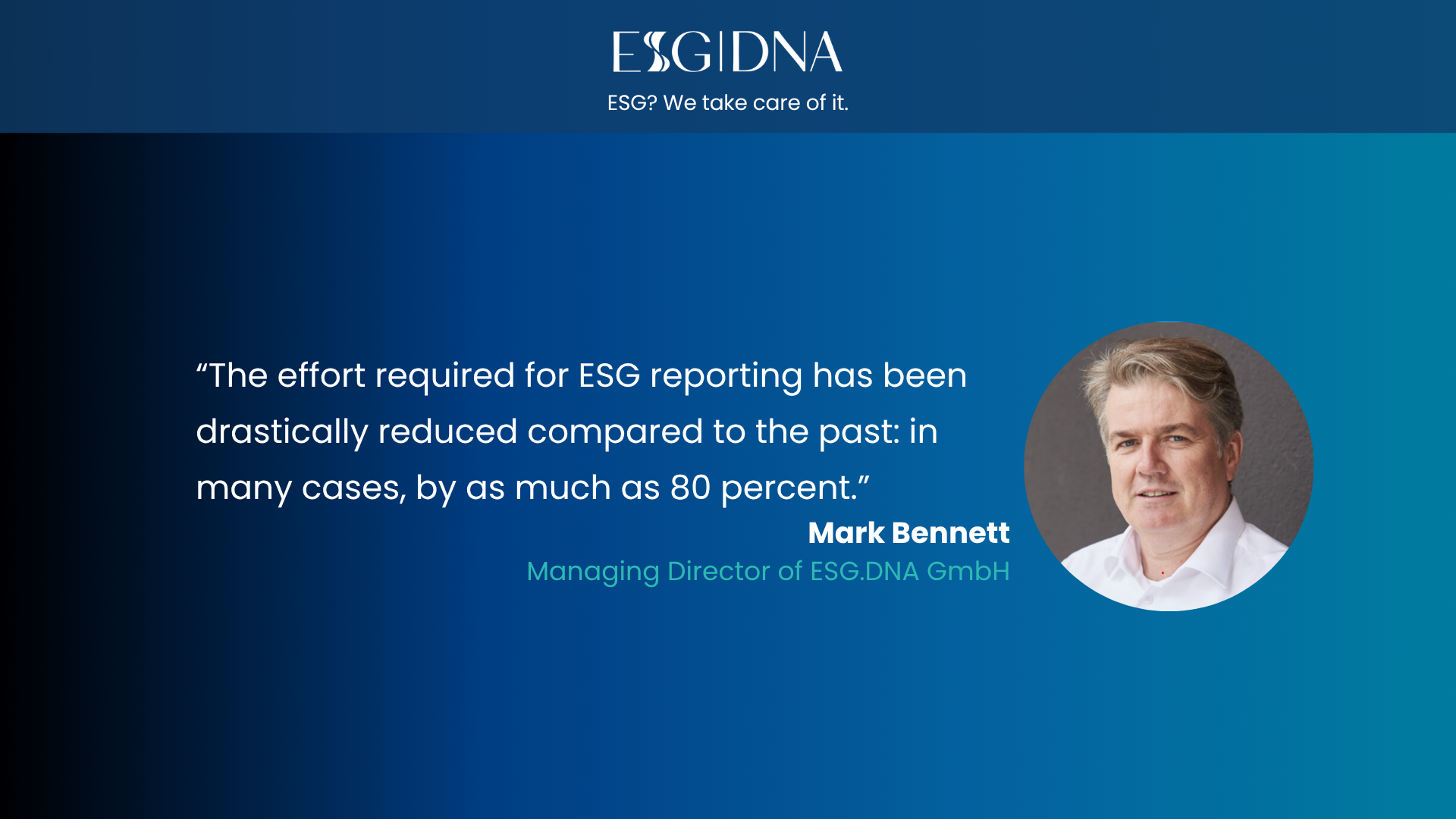
“The workload has been drastically reduced compared to the past—in many cases by as much as 80 percent,” explains Bennett. AI delivers significant efficiency gains, particularly in areas such as text processing, analysis, data evaluation, and structuring.
More Than Just Compliance: A Competitive Advantage Through Voluntary Reporting
A sustainability report has long been more than just a mandatory document. It helps companies better understand risks, use resources more efficiently, and identify strategic opportunities early on. At the same time, it fosters transparency with investors, banks, customers, and employees.
“A report forces companies to systematically examine their business model from a future-oriented perspective for the first time,” says Mark Bennett. “This has value that goes far beyond marketing.”
Companies that are not yet required to report are particularly well-positioned to benefit from getting started early. Those that begin collecting ESG data, establishing internal processes, and defining responsibilities today will gain a competitive edge in the market.
“Many companies underestimate just how much demand there is for ESG data today,” Bennett emphasizes. “Those who are prepared have a clear advantage—whether it comes to financing, tenders, or customer relationships.”
The Core: The Double Materiality Analysis
The so-called dual materiality analysis plays a central role. It examines, on the one hand, which ESG factors have a financial impact on the company (outside-in) and, on the other hand, what impact the company itself has on the environment and people (inside-out). „Sie ist das Herzstück jedes
“Sustainability report,” emphasizes Mark Bennett. “Because it forms the foundation for a company’s strategy, risk management, and long-term direction.” Although the VSME states that it is not mandatory for smaller businesses, it is strongly recommended. It helps identify opportunities and risks early on, set priorities, and develop a well-founded strategy for the future.
Conclusion
ESG reporting is evolving from a bureaucratic exercise into a modern management tool. For companies, getting started has rarely been as easy as it is today—or as relevant. Those who act now will not only strengthen their competitive position but also ensure the long-term viability of their business model.
ESG.DNA GmbH
ESG? We take care of it.